Yala National Park
Yala National Park
Spanning 1,297 km² in south-eastern Sri Lanka, Yala National Park is home to leopards, elephants, 215 bird species and several ancient monastic sites.
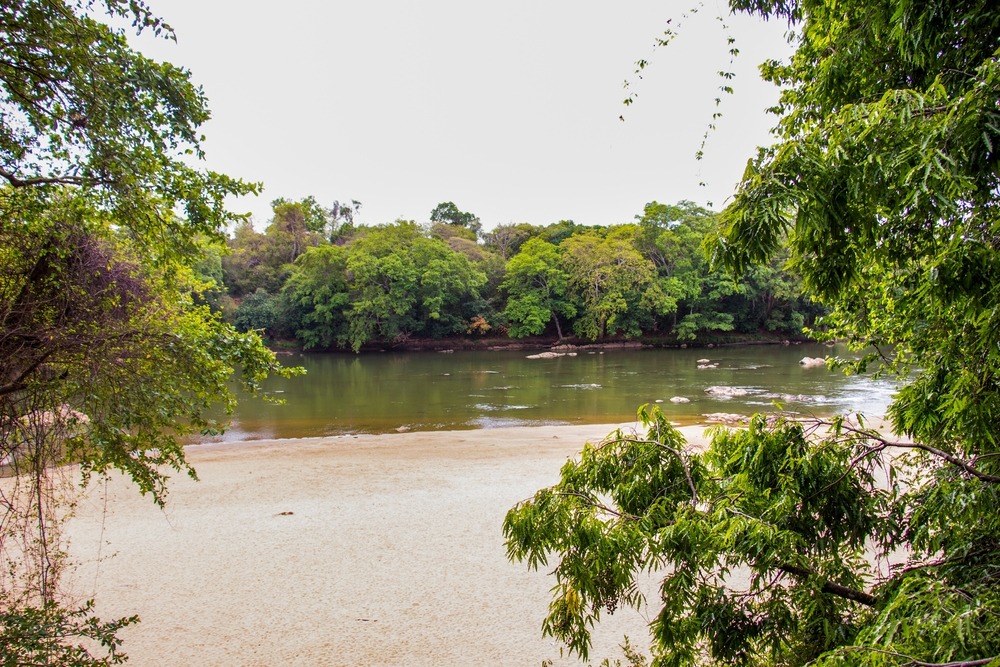
The Yala National Park extends across 1,297 km² in the south-eastern Sri Lanka, bordering the Indian Ocean. Renowned for its leopard population, among the densest in the world, and its elephant herds, it combines semi-arid plains, dry forests, coastal lagoons and Buddhist monastic remains. Access is from the town of Tissamaharama, around thirty kilometres from the main entrance.
Why visit Yala
Yala ranks among Sri Lanka's most visited national parks, and for good reason:
- Iconic wildlife: 44 mammal species, including the Sri Lankan leopard (Panthera pardus kotiya), Asian elephant, sloth bear, sambar deer, toque macaque, slender loris and rusty-spotted cat.
- Bird diversity: 215 species recorded, making the park an IBA (Important Bird Area), one of 70 on the island.
- Buddhist heritage: several ancient monastic complexes from the Ruhuna kingdom lie within the park.
- Contrasting landscapes: plains, scrubland, mangroves, grasslands, lagoons and coastline coexist within the same territory.
Park history
The earliest written records of the region date to 1560, when Spanish cartographer Cipriano Sanchez describes Yala as abandoned for three centuries due to disease. The territory remained marginal for long before being designated a wildlife sanctuary in 1900, at the same time as Wilpattu further north-west. Its initial area was then 389 km², bounded by the Kumbukkan River to the east and Menik River to the west.
Under British administration, the area paradoxically served as a hunting ground for European residents. Protected status was strengthened on 1st March 1938, when Yala became a national park under the Flora and Fauna Protection Ordinance. The perimeter was subsequently expanded through the addition of blocks.
In December 2004, the Indian Ocean tsunami struck the park's coast hard: approximately 5,000 hectares of grassland and scrubland were submerged and the coastline's topography was reshaped. Today, the park covers 1,297 km² divided into five blocks, with only blocks 1 and 5 open to the public — the others being reserved for scientific research.
What to see in the park
Leopards and large mammals
The leopard population is concentrated in block 1, making it the most sought-after sector for safaris. Sightings remain unpredictable, however: guide experience and patience make the difference.
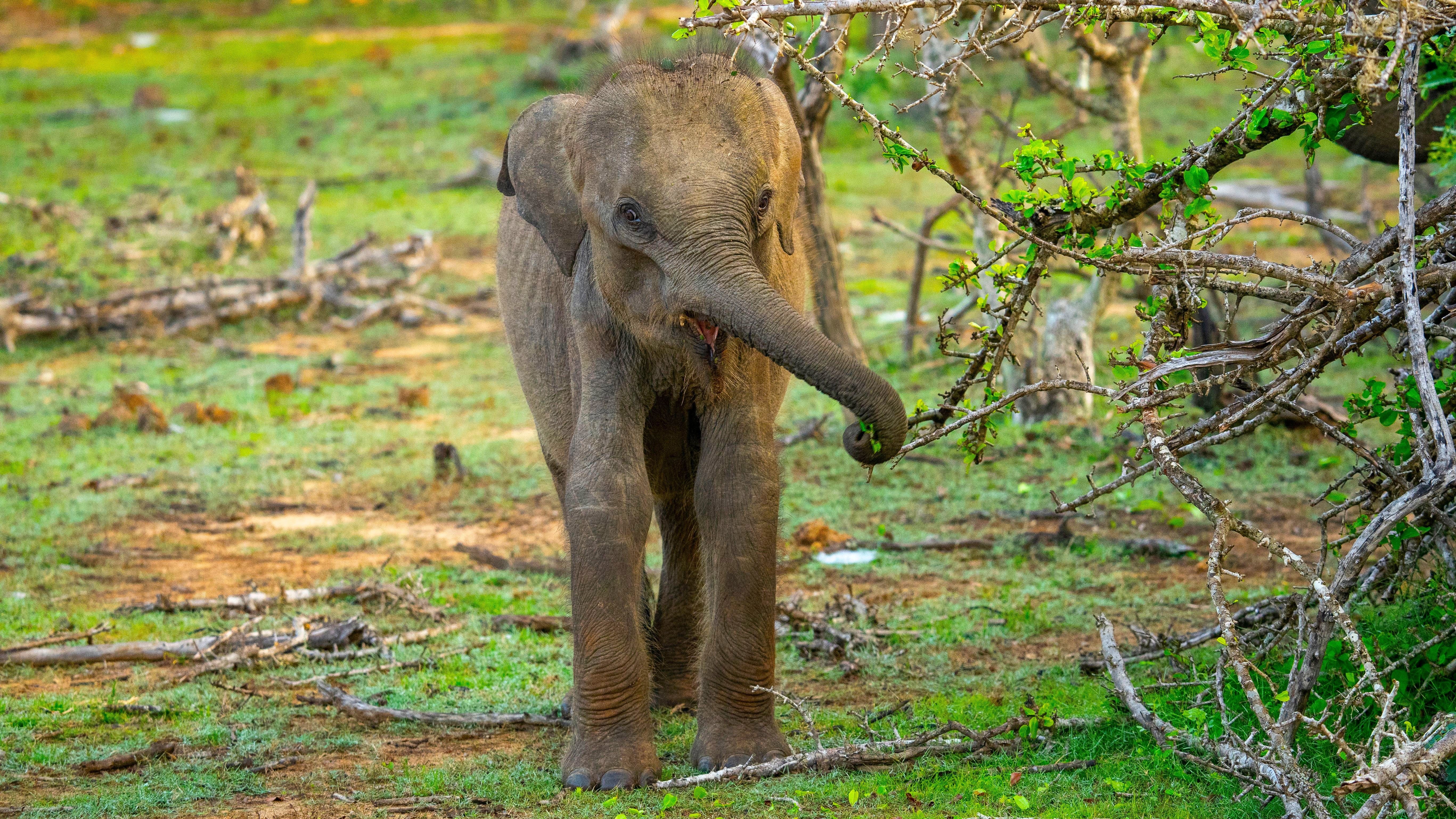
Elephants, estimated at between 250 and 350 individuals, move in herds through blocks 3, 4 and 5, while solitary bulls frequent blocks 1 and 2. The sloth bear, more elusive, emerges mainly during fruiting season.
Endemic birdlife
Of the 215 bird species recorded, six are endemic to Sri Lanka: Sri Lanka hornbill, Sri Lanka wood pigeon, Lafayette's chicken, crimson-backed flameback, brown-capped babbler and yellow-eared bulbul. Wetland zones also host numerous migrants between November and March.
Reptiles, amphibians and fish
Yala is home to 46 reptile and amphibian species, including 5 endemics such as the painted-lip lizard. Water bodies harbour marsh crocodiles, saltwater crocodiles and several turtle species. For fish fauna, 21 freshwater fish species are present, including endemics Garra ceylonensis and Esomus thermoicos.
Monastic sites and heritage
The ancient Ruhuna kingdom left several religious complexes within or immediately adjacent to the park: Situlpahuwa, Magul Vihara and Akasa Chaitiya. Associated sanctuaries at Katagamuwa, Kataragama and Nimalawa complete this spiritual network.
When to go
The park sits in Sri Lanka's dry zone, with temperatures ranging between 20 and 33 °C. The north-east monsoon brings rainfall between September and December.
- February to June: the most favourable period. Dryness concentrates animals around water sources and facilitates sightings.
- July-August: very dry, high visitation, consistently good wildlife viewing.
- 1st September to 15th October: annual closure of blocks 1 and 2 for ecosystem regeneration.
- November to January: heavier rainfall, denser vegetation, wildlife more dispersed.
Early morning and late afternoon outings offer the best viewing opportunities, when animals drink.
Practical information
- Jeep safaris only, accompanied by a guide and driver. Half-day or full-day options.
- Only blocks 1 and 5 are accessible to the public.
- No toilets inside the park: prepare before entry.
- Bring: sunscreen, warm clothing for early departures, water, binoculars and camera (no flash).
- Strict rules: no feeding animals, exiting vehicles, smoking, littering or bringing scented food. Non-compliance incurs fines.
- Tipping your guide at safari's end is customary, at your discretion.
How to get there
The usual starting point is the town of Tissamaharama ("Tissa"), located around thirty kilometres from block 1's entrance. Three main routes lead there:
- From Colombo: approximately 250 km via Ratnapura and Udawalawe.
- From Kandy: approximately 245 km via Nuwara Eliya and Haputhale.
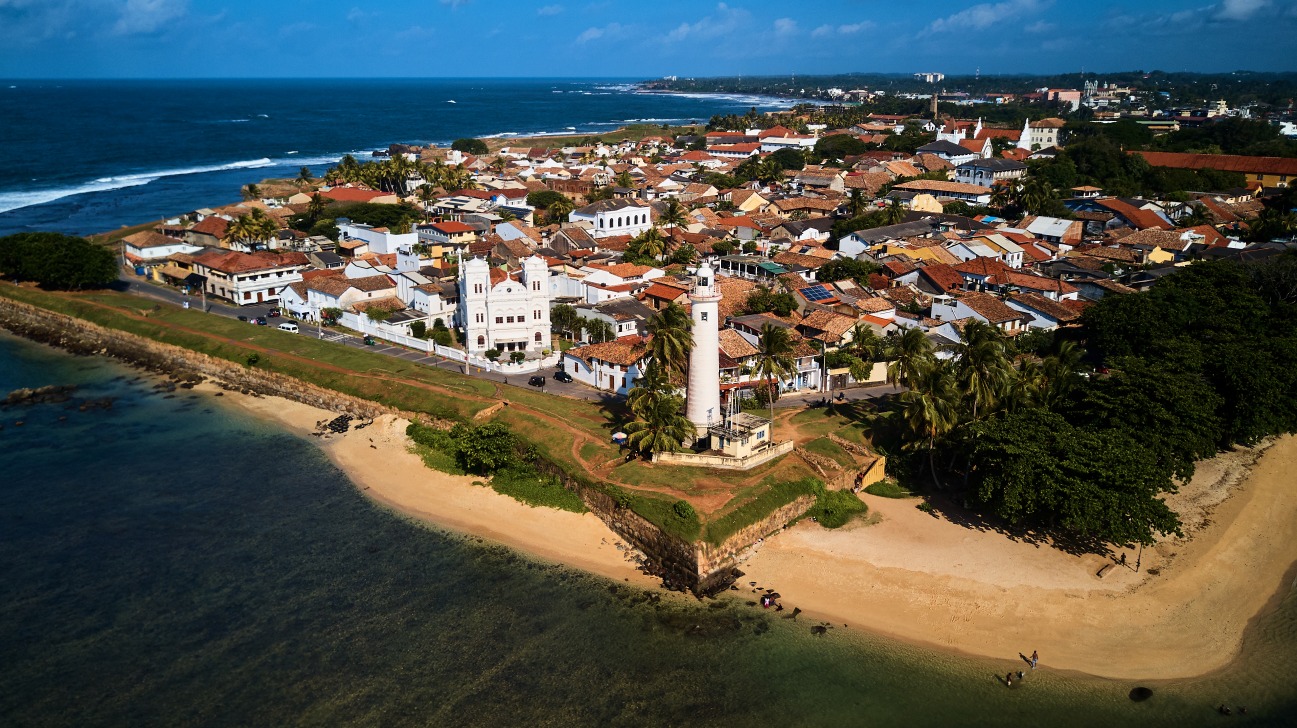
- From Galle: approximately 169 km via Matara, along the south coast.
An alternative is to enter via Kataragama coming from Arugam Bay through Buttala. From Tissa, a tuk-tuk or your tour operator's vehicle provides transfer to the park entrance.
Things to see nearby
- Tissamaharama and its ancient reservoir, the base camp for safaris.
- Kataragama, an important multi-faith pilgrimage centre.
- Bundala national park, adjacent to Yala, renowned for waterbirds and flamingos.
- Arugam Bay, on the east coast, popular for surfing.
- The rocky site of Buduruwagala, approximately two hours' drive away, houses seven Buddhist statues carved into the cliff face.
- The Ritigala forest reserve, further north, completes an exploration of inland Sri Lanka.
Frequently asked questions
Frequently asked questions
Between February and June, during dry season, animals concentrate around water sources and are easier to spot. Blocks 1 and 2 close from 1st September to 15th October.
No. Block 1 holds the park's highest leopard density, but sightings remain unpredictable. A full day and experienced guide increase your chances.
Options range from half-day (3 to 4 hours) to full-day. Morning outings are most productive for wildlife viewing.
No. Access is strictly by Jeep with an accredited guide. Exiting the vehicle is prohibited inside the park.
Udawalawe centres on elephants, which are easier to spot. Yala offers broader biodiversity (leopards, sloth bears, endemic birds) but receives more visitors.
Planning your trip
Yala National Park fits naturally into an itinerary combining the south coast, inland Buddhist sites and the highlands. To build a tailor-made trip, check our Sri Lanka travel suggestions.
Interested in this visit?
We can include it in your personalised itinerary.