Where to See Turtles in Sri Lanka: When and How to Observe Them Responsibly?
Sri Lanka is one of the rare countries in the world where you can observe 5 of the 7 existing sea turtle species.
Watching a sea turtle glide through the turquoise waters of the Indian Ocean or witnessing a female nesting on a beach in the middle of the night is one of the most striking natural experiences you can have in Sri Lanka. But where can you see sea turtles in Sri Lanka? Which beaches should you visit to spot them while snorkeling, witness nesting, or see hatchlings make their way to the ocean? And most importantly, how can you experience this encounter without disturbing these protected animals? We tell you everything about observing sea turtles in Sri Lanka.
What sea turtle species can you see in Sri Lanka?
Sri Lanka is one of the rare countries in the world where you can observe 5 of the 7 existing sea turtle species. The warm waters of the Indian Ocean and the long sandy beaches of the island form both feeding zones and important nesting sites for these marine reptiles.
Here are the species you can encounter around the island:
Green sea turtle (Chelonia mydas): it is the most frequently observed turtle in Sri Lanka. It owes its name to the greenish color of its fat, linked to its diet composed of algae and seagrass;
Hawksbill sea turtle (Eretmochelys imbricata): recognizable by its overlapping shell scales and pointed beak, it is one of the most endangered species in the world;
Olive ridley sea turtle (Lepidochelys olivacea): smaller than other species, it owes its name to its gray-green shell. In Sri Lanka, it nests on several beaches, though observations remain less frequent.
Loggerhead sea turtle (Caretta caretta): recognizable by its particularly large and powerful head, adapted for crushing shells and crustaceans, it is relatively rare in Sri Lankan waters, but sightings are sometimes reported offshore;
Leatherback sea turtle (Dermochelys coriacea): measuring over 2 meters in length, it is the largest sea turtle in the world. Unlike other species, it has no rigid shell but thick, dark skin. It remains very rare in Sri Lanka.
Where to see sea turtles in Sri Lanka: the best spots
Where to see sea turtles in the water in Sri Lanka (snorkeling or diving)?
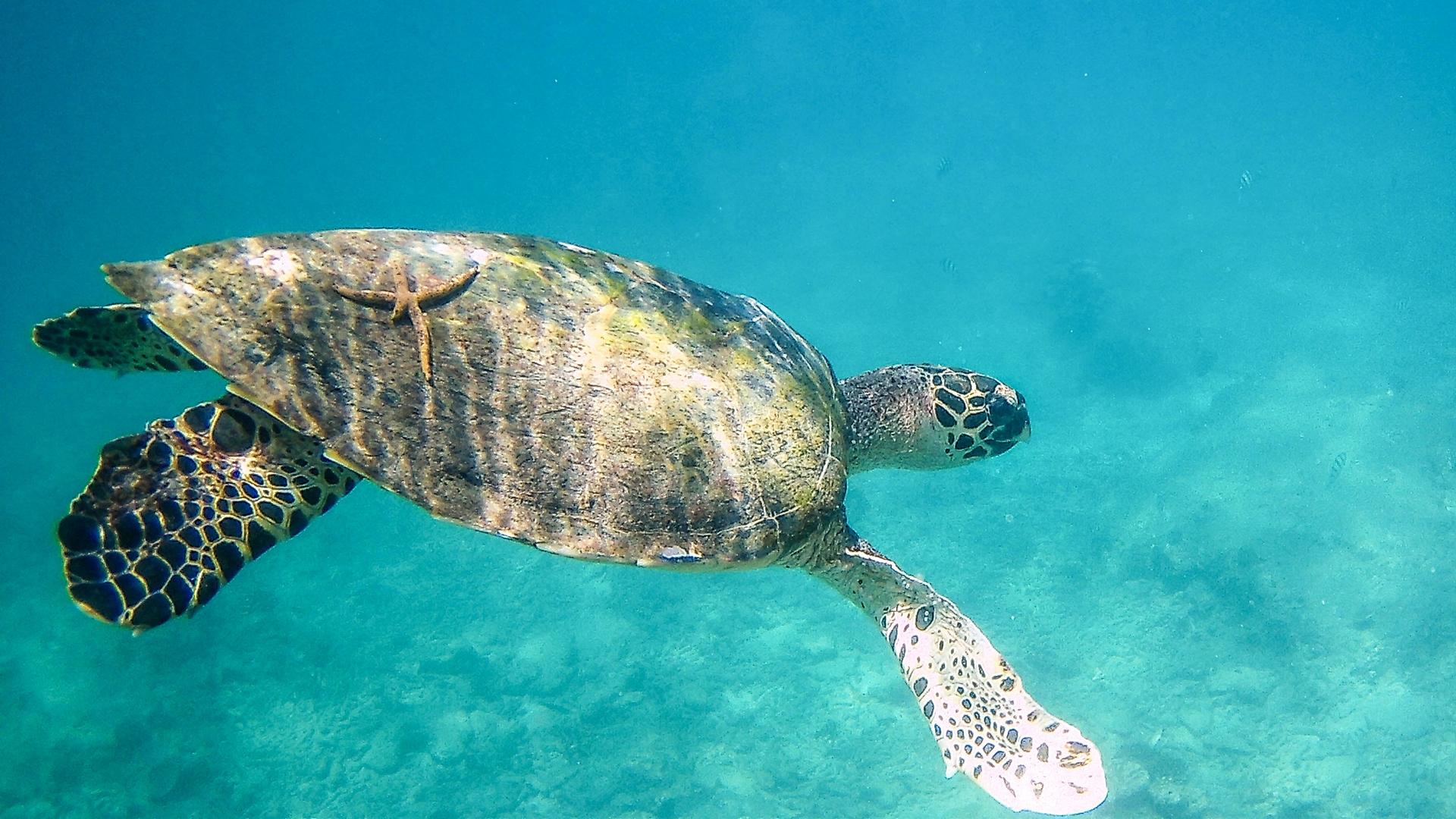
Several beaches in southern Sri Lanka allow you to observe sea turtles directly in the water. In some places, a simple mask and snorkel are enough to spot green turtles feeding on the seafloor.
Hikkaduwa
Located about two hours south of Colombo, Hikkaduwa remains one of the easiest places to see sea turtles in Sri Lanka, but it is also one of the sites where problematic tourist interactions are most common. Sightings are often easy, but high tourist traffic causes problems: some visitors feed turtles to attract them. This practice disrupts their natural behavior and can harm their health. If you visit Hikkaduwa, the ideal approach is to observe turtles from a distance without interaction.
Dalawella Beach (near Unawatuna)
Just minutes from Unawatuna, Dalawella Beach is another famous spot for seeing turtles in the water. The beach is protected by a shallow reef, making snorkeling easy. Here too, green turtles are frequent. But the popularity of the spot attracts many visitors, and some locals offer to feed turtles with algae to bring them very close. It is better to decline this type of interaction and prioritize respectful observation.
Polhena Beach (Matara)
Less known than the two previous ones, Polhena Beach is often mentioned by travelers and local guides as a pleasant place to see turtles while snorkeling. Protected by a reef, the sea there is generally calm and you can sometimes spot green turtles feeding in seagrass beds.
Reefs around Mirissa
The Mirissa region is mainly known for whale watching, but some snorkeling or diving trips also allow you to encounter sea turtles. Sightings remain less guaranteed than on some beaches, however, as turtles move around frequently to feed.
Where can you see turtle nesting in Sri Lanka?
Witnessing a sea turtle come ashore to nest is a rare and striking experience. After spending most of their lives at sea, females return to the beach where they were born to dig a nest and lay their eggs. These observations typically take place at night, when turtles quietly come ashore. Organized outings usually start between 8 PM and 9 PM and can last several hours.
Here are the best spots to see sea turtles nesting in Sri Lanka:
Rekawa Beach
Near Tangalle, Rekawa Beach is one of the country's most renowned sites for observing turtle nesting. The site is monitored by a local conservation project and visits are generally guided, with guides ensuring minimal disturbance: no direct light, silence, respectful distance. Several species come to nest here, including green turtles and olive ridley turtles.
Kalametiya
The Kalametiya region is less touristy than Tangalle and attracts travelers seeking more intimate experiences. Some nearby beaches also welcome nesting turtles, and observation can sometimes be done with local guides. The atmosphere is often wilder and quieter than at the most famous sites.
Kosgoda
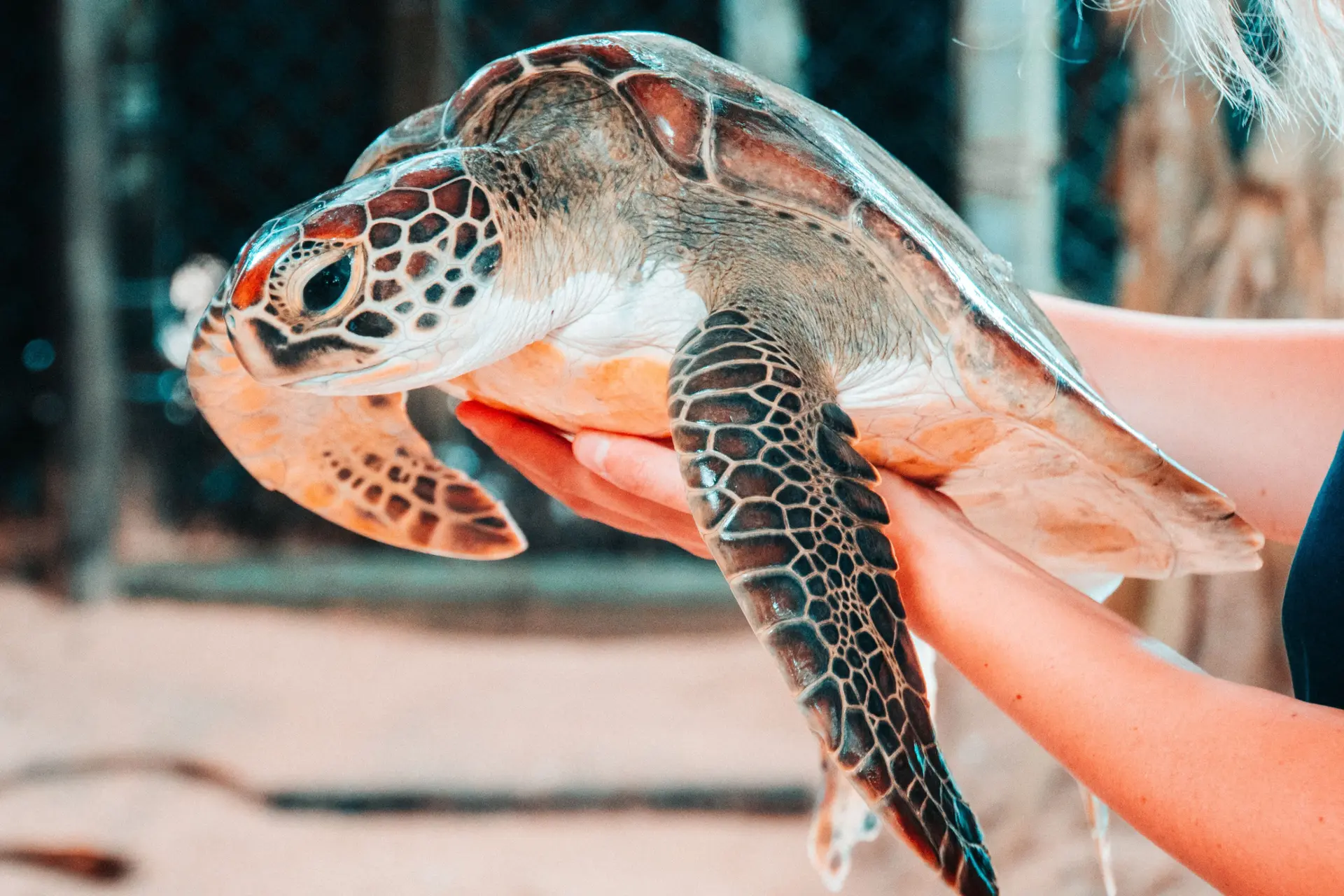
Located between Colombo and Galle, Kosgoda is historically known for its nesting beaches. However, the region is also famous for its turtle hatcheries or turtle breeding centers, facilities that collect eggs to protect them before releasing baby turtles. Be careful! Some facilities do genuine conservation work, but others are mainly tourism-oriented. It is therefore important to research before visiting.
Where can you see baby turtle hatchings in Sri Lanka?
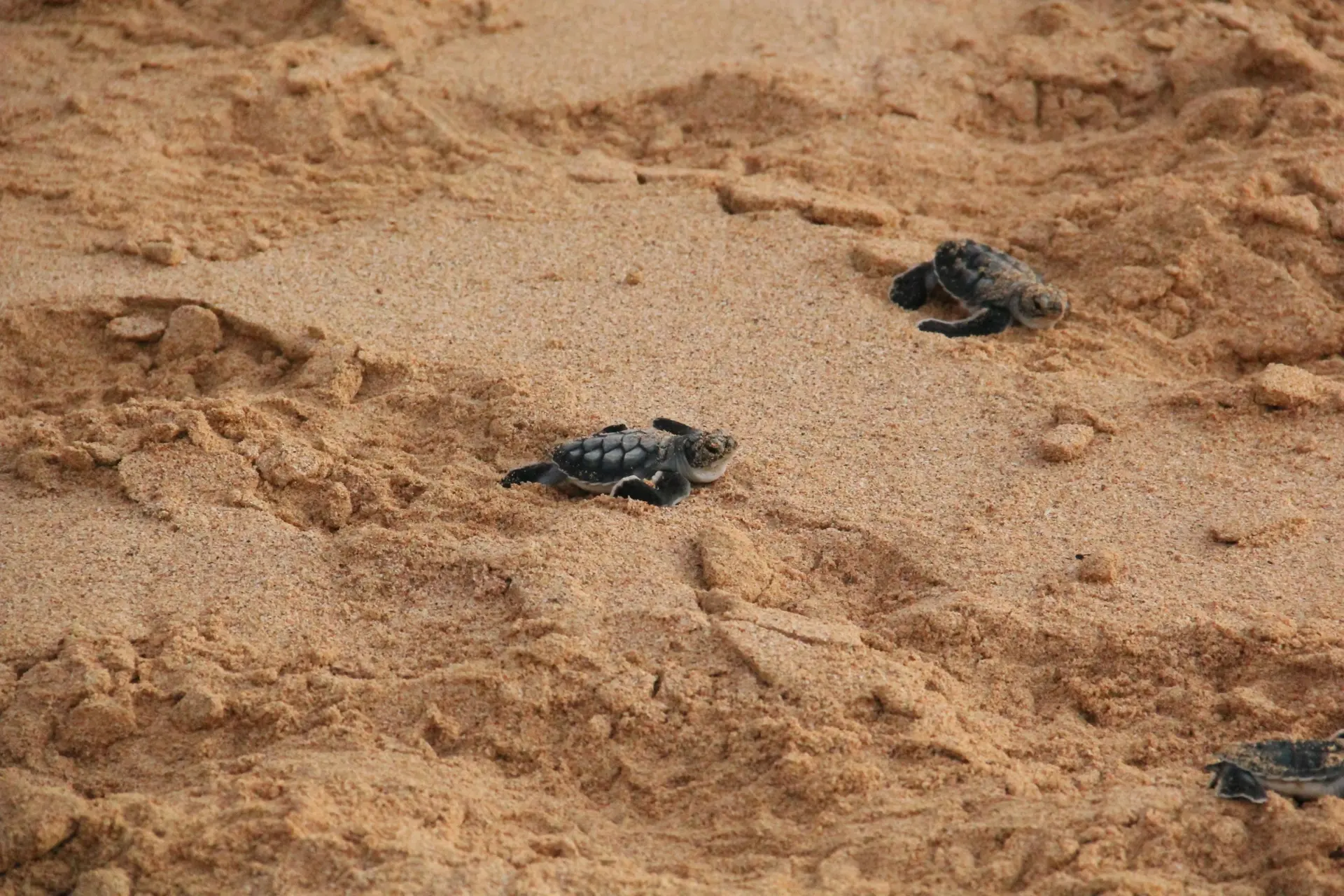
After approximately 45 to 60 days of incubation, baby turtles emerge from the sand and instinctively head toward the ocean. In nature, this occurs generally at night, when temperatures drop and predation risks are lower.
Several southern Sri Lankan beaches are known for these hatchings, particularly around Rekawa Beach, where conservation projects monitor nests and protect nesting zones. With a local guide, it is sometimes possible to witness baby turtles emerging when a nest hatches. In other places like Kosgoda, Bentota, or Habaraduwa, some facilities collect eggs to protect them in secure areas before releasing baby turtles to the sea.
These releases sometimes allow travelers to witness the moment when hatchlings join the ocean. But it is important to remain vigilant: when these releases are organized solely for tourists or when baby turtles are excessively handled, it can harm their survival!
Good to know
The most serious conservation projects prioritize minimal intervention, limit handling and release turtles in conditions as close as possible to their natural environment.
When can you see sea turtles in Sri Lanka?
Can you see turtles year-round?
Good news for travelers: it is possible to observe sea turtles in Sri Lanka almost year-round, particularly in the water. Indeed, green turtles regularly frequent the reefs and seagrass beds of the southern and southwestern coast, where they come to feed. In places like Hikkaduwa, Mirissa, or Unawatuna, it is not uncommon to spot them during a snorkeling trip, regardless of the month of the year.
« Expert tip from Mai Globe Travels: If you want to observe turtles in the water, prioritize early morning hours. The sea is often calmer and visibility is better. This is also when turtles come to feed in seagrass beds near the shore. »
When is turtle nesting season in Sri Lanka?
Each year, several island beaches become the stage for a fascinating phenomenon: the return of sea turtles coming to nest. Turtle nesting season in Sri Lanka generally runs from October to April on the southern and southwestern coast, when females come ashore after nightfall. Guided by instinct, they dig a nest in the sand to lay their eggs before returning to the ocean.
Nesting observations generally occur between 8 PM and 2 AM, depending on the arrival of turtles.
Good to know
A single turtle can deposit between 80 and 120 eggs in one nest, and some females return to nest multiple times during nesting season.
What is the best time to see baby sea turtles in Sri Lanka?
After approximately 45 to 60 days of incubation, baby turtles begin to emerge from the sand. In nature, this emergence typically occurs at night, when it is cooler and predation risks are lower. On southern Sri Lankan beaches, hatchings often occur between December and June, with a peak in the early months of the year.
When the moment arrives, dozens of tiny turtles emerge from the nest almost simultaneously and instinctively head toward the ocean, guided by the light of the horizon.
It is a moment both spectacular and fragile: of hundreds of baby turtles, only a small portion will survive to adulthood.
This is also why several conservation projects monitor certain beaches and protect the most exposed nests…
How to observe sea turtles in Sri Lanka without disturbing them?
Are observations regulated?
Sea turtles are strictly protected by law in Sri Lanka. Their protection falls under the Fauna and Flora Protection Ordinance, one of the country's main environmental laws. This legislation prohibits capturing, injuring, or killing sea turtles, as well as collecting or selling their eggs.
In certain sensitive areas, particularly around Rekawa Beach, access to nesting sites can be regulated to limit disturbance. Night patrols monitor beaches during breeding season and educate visitors.
In practice, however, the situation remains mixed. At some well-managed conservation sites, observations are strictly regulated and visitors must follow specific rules. But in other highly touristy locations, especially on popular beaches in southern Sri Lanka, rules are harder to enforce, particularly when turtles are accustomed to human presence…
Good conduct rules to follow
Observing sea turtles in Sri Lanka is a powerful experience, but it also comes with responsibility: not disturbing animals already weakened by pollution, fishing, and the disappearance of some nesting sites.
Even though turtles sometimes seem accustomed to human presence, their behavior can easily be disrupted by inappropriate conduct.
On several beaches across the country, guides and conservation projects remind visitors of a few simple but essential rules to limit visitor impact:
Always maintain distance: in water or on the beach, avoid getting too close to a turtle and especially do not pursue it. When it is feeding or coming ashore to nest, the animal must not feel encircled or blocked in its movements;
Never touch a turtle: contact can cause stress and also transmit bacteria or damage the turtle's shell and skin;
Do not use artificial light: on nesting beaches, powerful lamps, camera flashes, or phone screens can disturb females coming to nest. Baby turtles, meanwhile, orient themselves naturally using the light of the horizon: an artificial light source can disorient them and lead them away from the sea;
Remain discreet and quiet: sudden movements and noise can disturb turtles which, if they feel threatened, may abandon their nesting attempt;
Never feed turtles: on some highly touristy beaches, visitors or service providers give algae to attract animals near the shore. This practice changes their natural behavior and can make them dependent on human presence.
Respecting these few principles transforms observation into a true encounter with a wild animal, rather than a simple tourist attraction.
How to choose a responsible agency for seeing sea turtles in Sri Lanka?
The first thing to check is how turtles are approached. A reputable agency never offers to touch animals, handle them, or feed them to facilitate observation. It instead prioritizes a discreet, distant approach and explains to visitors why these rules matter.
It is also preferable to choose excursions led by guides trained in wildlife protection. Good guides know the nesting beaches, can spot tracks left in the sand, and most importantly explain how to behave so as not to disturb turtles.
Another important point: group size. Responsible observations are generally conducted in small groups to minimize noise and pressure around the animal. When dozens of people surround a turtle on the beach or in the water, the risk of disturbance becomes much greater.
Finally, some agencies work with local conservation projects that protect nesting beaches or raise awareness among coastal communities. Supporting this type of initiative allows you to contribute, even indirectly, to sea turtle protection.
In Sri Lanka, some local agencies committed to more responsible tourism, such as Mai Globe Travels, prioritize respectful wildlife observation and encourage travelers to adopt best practices in the field. Discover Sri Lanka's turtles with Nomadays under the right conditions!
Sri Lanka is among the rare destinations where you can observe several sea turtle species in their natural environment, sometimes year-round depending on the region. But these encounters remain fragile: turtles are protected wild animals and their survival depends also on visitor respect and preservation of their habitats.
Choosing the right observation sites, avoiding problematic tourism practices, and prioritizing experiences guided by committed stakeholders allows you to fully enjoy this experience while contributing to the protection of these emblematic species of the Indian Ocean.
If you dream of observing sea turtles in Sri Lanka under the best conditions, the local team at Mai Globe Travels, partner of the Nomadays collective, can help you organize a trip suited to the season and regions most conducive to their observation.
Looking to learn more or plan your Sri Lanka trip?
Feel free to contact our English-speaking local team to prepare your itinerary and discover the best places to observe sea turtles in Sri Lanka.
Need inspiration for your upcoming trip? Also discover all our Sri Lanka travel packages.
Also discover:
FAQ: curious minds' corner
Frequently asked questions
Yes, it is possible to observe sea turtles while snorkeling in several locations in southern Sri Lanka, particularly near Hikkaduwa, Unawatuna, or Mirissa. It is however essential to maintain distance, never touch the animals, and never feed them.
A guide is not necessary to observe sea turtles in the water. However, to witness nesting on the beach, being accompanied is often recommended. Local guides know the nesting beaches, can spot tracks left in the sand, and explain how to behave so as not to disturb the animals. At some sites like Rekawa Beach, observations are even guided to protect turtles and their nests.
Even though baby turtles seem fragile and fascinating, handling them is strongly discouraged. Human contact can cause stress, and repeated handling increases injury risk. Moreover, when baby turtles emerge from the sand, they must reach the ocean on their own. This journey is important for their development and future sea orientation. Moving them or carrying them directly to the water can disrupt this natural process.