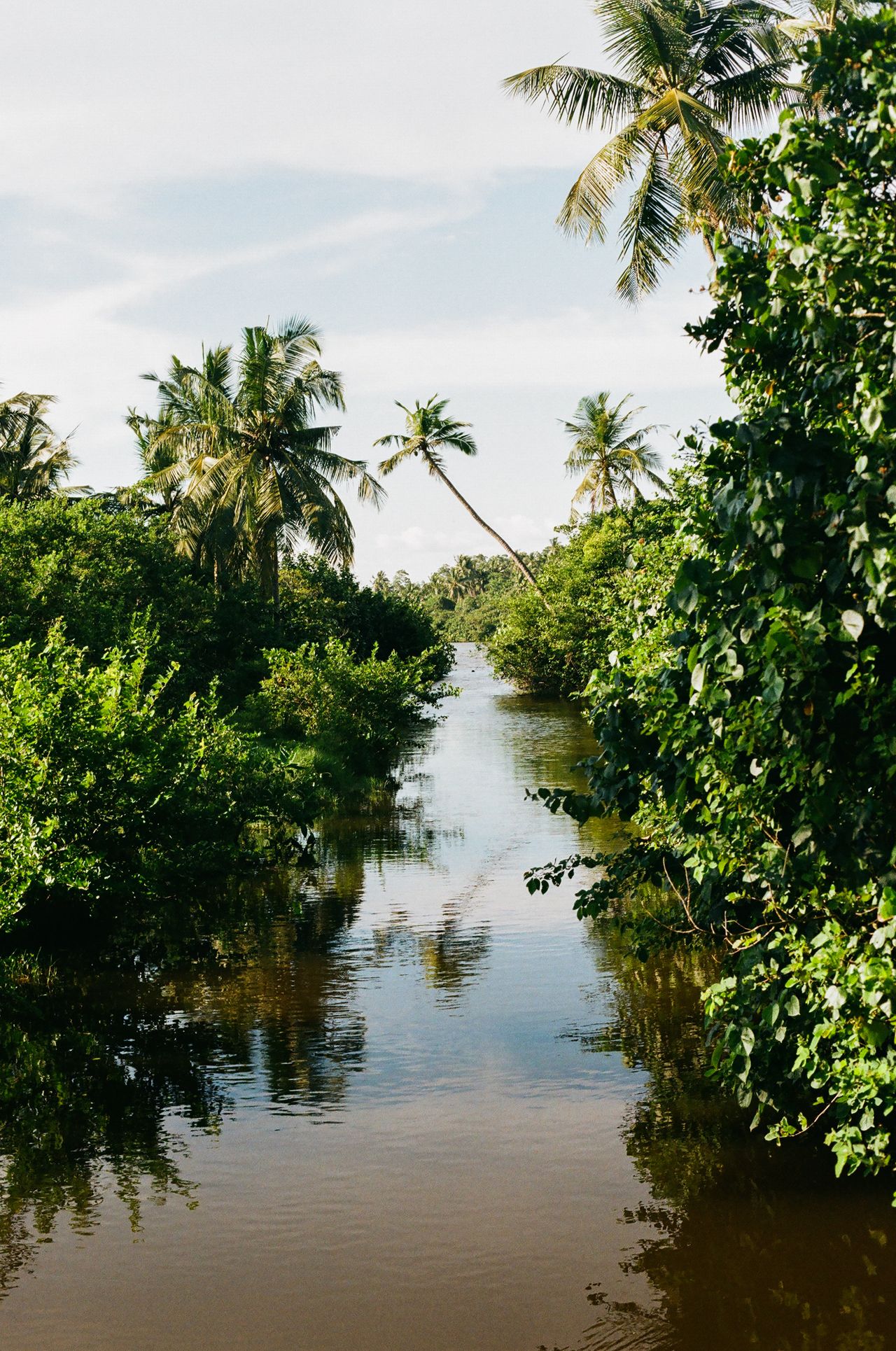
Castlereagh Reservoir
Nestled in the highlands near Hatton, Castlereagh Reservoir offers a serene landscape of terraced tea plantations and calm waters, far from the beaten tourist trail.
Castlereagh Reservoir stretches across Sri Lanka's highlands near Hatton, at the heart of a tea plantation landscape. Created by a dam on the Maskeliya River, this artificial lake offers a striking setting: still waters ringed by verdant hills and terraced tea gardens. It is a place of serene nature, little frequented by standard tourist circuits, that appeals to hikers and lovers of high-altitude scenery.
What to see
The reservoir itself is the main spectacle: a vast expanse of water surrounded by tea plantations as far as the eye can see. Misty mornings are particularly photogenic here. The surrounding hills, some rising above 1,500 meters, frame the lake and allow for walks with sweeping views over the water and cultivations.
- Panoramas of terraced tea plantations
- Reflections of sky and hills on calm water
- Local fauna: waterfowl and highland species
- Characteristic misty atmosphere of high-altitude mornings
History and context
The Castlereagh Dam was built during the British colonial era to supply water to the region and support the tea industry. It is part of a network of reservoirs developed in the Ceylon highlands, alongside the nearby Massakela Reservoir. The Hatton region owes its economic development to the boom in tea plantations in the nineteenth century.
Highlights of your visit
The shores at sunrise
Early in the morning, mist descends over the water and hills disappear into clouds. This is the most spectacular time to observe the reservoir, before light disperses the blanket of fog.
Tea plantations along the shoreline
The tea gardens surrounding the lake are accessible on foot. You can observe tea pickers at work and understand the production cycle of Ceylon tea in its natural setting.
Walks along the heights
Paths running along the ridges offer sweeping views over the water. Walking is accessible without specialized equipment, though trails can be slippery after rain.
Photography tips
Morning light, between 6 a.m. and 8 a.m., is ideal: mist creates depth effects on the water and hills. Choose a high vantage point from the ridge paths to frame the lake with rows of tea bushes. During the rainy season, low clouds add dramatic atmosphere.
Location and access
Castlereagh Reservoir is located a few kilometers from Hatton, a town accessible from Colombo or Kandy by road or mountain train. The Colombo–Badulla railway line, renowned for its scenery, serves Hatton. From the town, the reservoir is accessible by tuk-tuk or rental car. Mountain roads can be narrow and winding.
Immediately nearby is Massakela Reservoir, another artificial lake in the highlands, and the region of Adam's Peak (Sri Pada), a sacred summit visible in clear weather.
Around the area
- Adam's Peak (Sri Pada) — iconic pilgrimage summit of the highlands, visible from the reservoir's shores in clear weather.
- Massakela Reservoir — another neighboring dam lake, also surrounded by tea plantations.
- Nuwara Eliya — colonial highland town, center of Ceylon tea culture, about an hour's drive away.
Frequently asked questions
The dry season, from January to April, offers the clearest conditions. Outside this period, the mist and frequent rains of the highlands may limit visibility, but add a particular atmosphere to the landscape.
From Hatton, a tuk-tuk or car with driver is the most practical solution. Mountain roads are winding; check locally about track conditions, especially during the rainy season.
Yes. Hatton is the usual starting point for climbing Adam's Peak. Castlereagh Reservoir can be visited during the day, before or after the night ascent to the summit.
The reservoir is a hydraulic infrastructure. Some areas near the dam may be regulated. Respect any fences and no-entry signs.
The areas around the reservoir accessible by car are suitable for families. The ridge trails are, however, uneven and not recommended for people with reduced mobility.

Interested in this visit?
We can include it in your personalised itinerary.